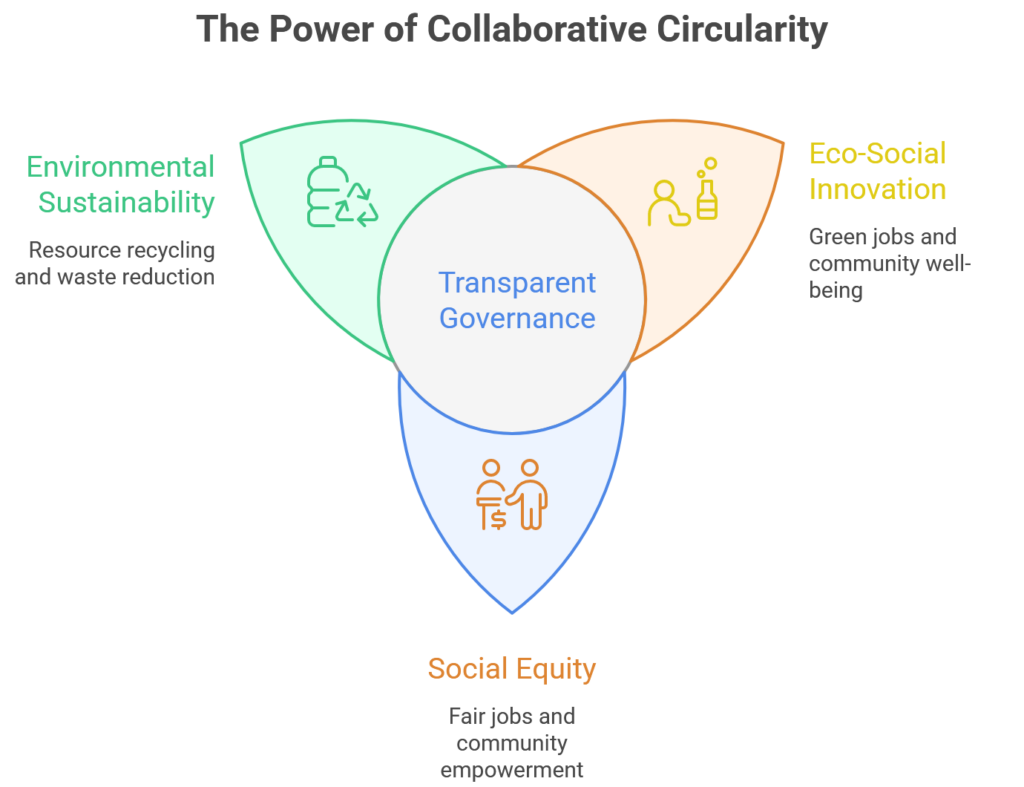
Last week, we discussed circularity, including the possibility of applying circularity principles to support ESG performance. This article sheds light on how these principles are being applied by different companies in the international arena.
Patagonia
- A California-based outdoor apparel company.
- The objective is to create a line that never ends up in a landfill: zero waste.
- Features:
- The Worn Wear program.
- Encourages the repair, reuse, and recycle of outdoor gear instead of discarding.
- Has repaired millions of items.
- Prioritizes recycled materials like the Responsibili-Tee.
- Encourages resells.
- Customers can trade in their used goods.
- Has a rentals initiative.
- The Worn Wear program.
- ESG relevance.
- E- Reduces textile waste and resource use.
- S-Builds a community around anti-disposability.
- G– Long-term commitment to durability, transparency, and mission-driven decision-making.
IKEA
- A global Swedish-founded home furnishing retailer.
- The objective is to adopt system-wide changes for a complete circular business.
- Features:
- Designs products that will be reused, repaired, refurbished, and recycled.
- Circular services are in >80% of the markets.
- Repair, removal, and buy-back.
- Online and offline second-hand product sales.
- The As-Is category.
- Prolonging product life.
- The wedge dowel assembly technique.
- Extendable beds that adapt to growth.
- After-sales parts.
- ESG relevance.
- E-Material circulation reduces raw material extraction and waste.
- S-Indirect-Enhances access to second-hand goods.
- G- Strategic planning for circular design in product lines.
Philips
- A Dutch technology company focusing on consumer health and home care innovations.
- The objective is “use less, use longer, use again- across the value chain”.
- Features:
- Applies circularity in the entire product lifecycle.
- Use fewer virgin materials.
- Stay in use longer.
- Can be recovered through refurbishment or recycling.
- Circular offerings.
- EcoDesign approach to reduce resource use and waste.
- Software and digital solutions to reduce dedicated hardware.
- Lumify with Reacts connects directly to handheld devices.
- Products as a service model.
- Accepts and refurbishes some healthcare products.
- Upgrade services through the SmartPath program.
- Applies circularity in the entire product lifecycle.
- ESG relevance.
- E- Lower emissions and reduced waste.
- S-Indirect-Increased healthcare access and affordability.
- G- Business model innovation linked to sustainability outcomes.
Interface Incorporated
- An American global manufacturer of commercial flooring.
- Driven by mission zero that aims for zero negative environmental impact.
- Features:
- Design products with the full life cycle in mind.
- Durable, reusable, or recyclable flooring.
- ReEntry programs take back products from customers.
- Reuse, recycle, or energy recovery.
- Over 75 million pounds of post-consumer carpets.
- Carbon-storing materials to avoid extra carbon.
- Bio-based inputs.
- Durability.
- 15-year Reference Service Life (RSL).
- Design products with the full life cycle in mind.
- ESG relevance.
- E- Waste reduction and material innovation.
- S-The Networks program buys discarded fishing nets from vulnerable coastal communities.
- G- Long-term strategic commitment to circular design.
Nike
- An American athletic footwear and apparel company.
- Driven by a “move to zero” mission.
- Features:
- Low impact materials that use consumer recycled feedstock.
- Flyleather leather uses 50% leather manufacturing scraps.
- Designing with cyclability in mind.
- Recycles grind rubber annually back into the footwear, courts, and tracks.
- Waste avoidance and reduction in product creation.
- Nike Flyknit creates footwear uppers directly from yarn.
- Green chemistry to reduce/eliminate hazardous substances.
- The target is zero discharge of hazardous chemicals (ZDHC).
- Utilizes the Cradle to Cradle Certified™ standard.
- Recycling.
- Recycles and donates some worn shoes and apparel.
- Collects local vintage and dead stock product to use in new designs.
- Eligible returns for gently-used items at a lower price in select markets.
- Durability.
- Extends the lifetime of products by maintaining and repairing them.
- Low impact materials that use consumer recycled feedstock.
- ESG relevance.
- E- Diverts and reduces waste.
- S- Supports community sports and healthy lifestyles via recycled materials.
- G- ZDHC alignment and design standards support governance.
Veja
- Veja is a Brazilian company that creates shoes from bio-based and recycled materials.
- Veja partners with Brazilian catadores (informal waste picker cooperatives) to collect plastic bottles.
- Turns the PET bottles into recycled polyester (B-Mesh) for Veja shoes.
- Fair-trade partnerships create income for marginalized workers.
- The supply chain has full traceability.
- ESG relevance.
- E- Recycles PET and reduces environmental waste in Brazil.
- S-Creates fair compensation jobs in vulnerable communities.
- G- Transparency and supplier relationships support governance.
Conclusion
- Circularity principles are being applied in the international arena.
- Circularity is shaping business models, supply-chain governance, waste regulation, and environmental risk management.