East Africa needs infrastructure. We need more trade corridors that will foster regional integration and economic development. However, these developments must be sustainable.
The United Nations Environment Programme (UNEP) warned of the escalating greenhouse gas emissions along the Northern Corridor. The corridor connects Kenya’s Port of Mombasa with Uganda, Rwanda, Burundi, South Sudan, and the Democratic Republic of Congo. UNEP identified heavy-duty freight transport along the corridor (daily truck traffic of approximately 2,000–3,000 trucks) as a major source of greenhouse gases and short-lived climate pollutants.
This project highlights the need for us to make sure that sustainability is built into projects from the beginning. Also clear is that an economically valuable project can have significant environmental and social costs. Despite the corridor improving connectivity and employment, it is increasing air pollution. These concerns should have been addressed if a sustainability analysis had been done during project conception.
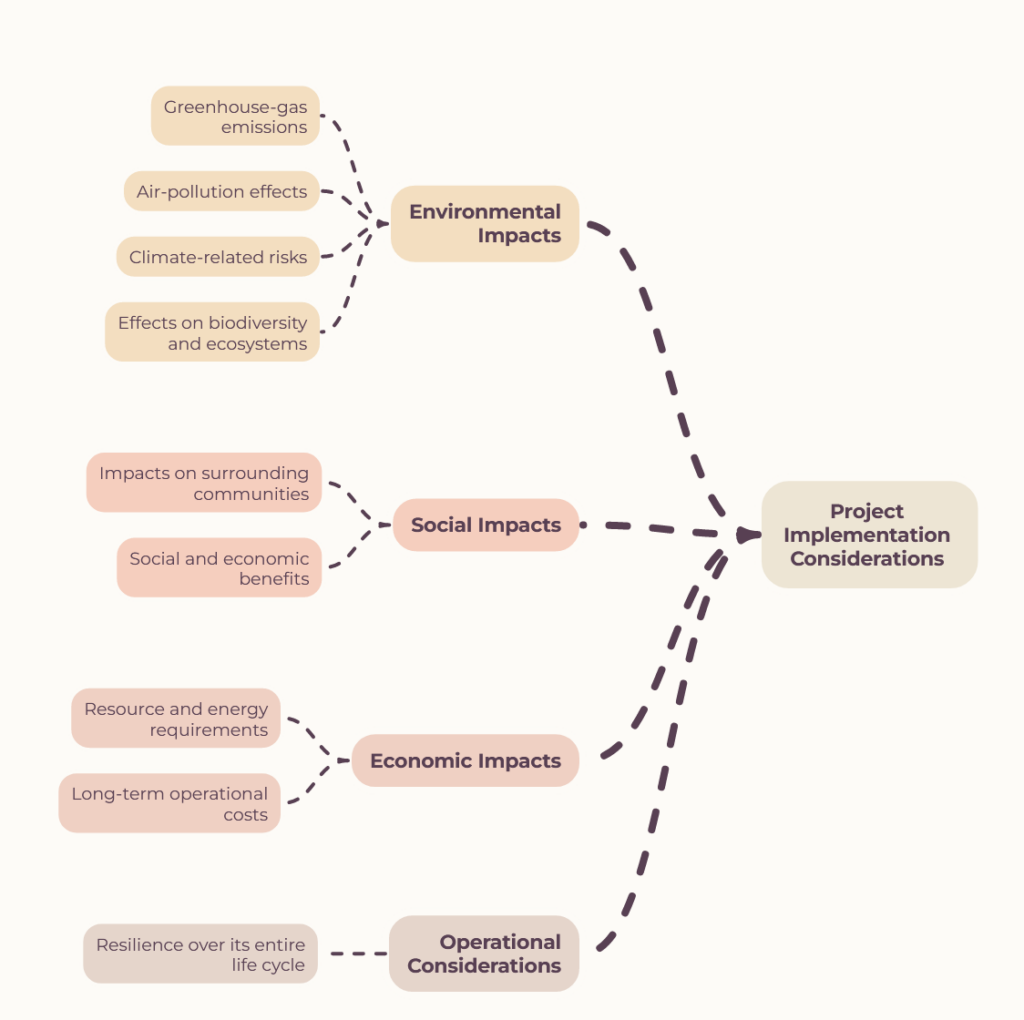
At a minimum, the implementers should have considered possible:
- Greenhouse-gas emissions
- Air-pollution effects
- Climate-related risks
- Effects on biodiversity and ecosystems
- Impacts on surrounding communities
- Resource and energy requirements
- Social and economic benefits
- Long-term operational costs
- Resilience over its entire life cycle
Incorporating sustainability during project conception ensures optimal technology selection, location, procurement, financing, construction methods, and operations.
For the Northern Corridor, these decisions are already locked in. The way forward is mitigating these effects.
- The UNEP and other entities are supporting countries along the corridor to improve emissions data, establish emissions-accounting systems, identify policy and regulatory gaps, and develop coordinated green freight strategies. This is in line with the GLEC Framework and ISO 14083.
- The 2030 strategy is targeting a 10% improvement in freight fuel efficiency compared to 2024 levels; a 12% reduction in particulate matter, black carbon, and nitrogen oxides; a 10% reduction in CO₂ emissions intensity; eco-driving training for 1,000 drivers; and improved climate resilience for at least 2,000 kilometers of roads.
The Northern Corridor therefore remains an expensive lesson for the region. Key lessons are:
- Project developers must integrate sustainability into design and implementation.
- Technical consultants should conduct comprehensive evidence-based analyses.
- Governments should have clear regulations that establish sustainability expectations.
- Financiers should go beyond financial analysis to consider environmental, social, and climate risks.